
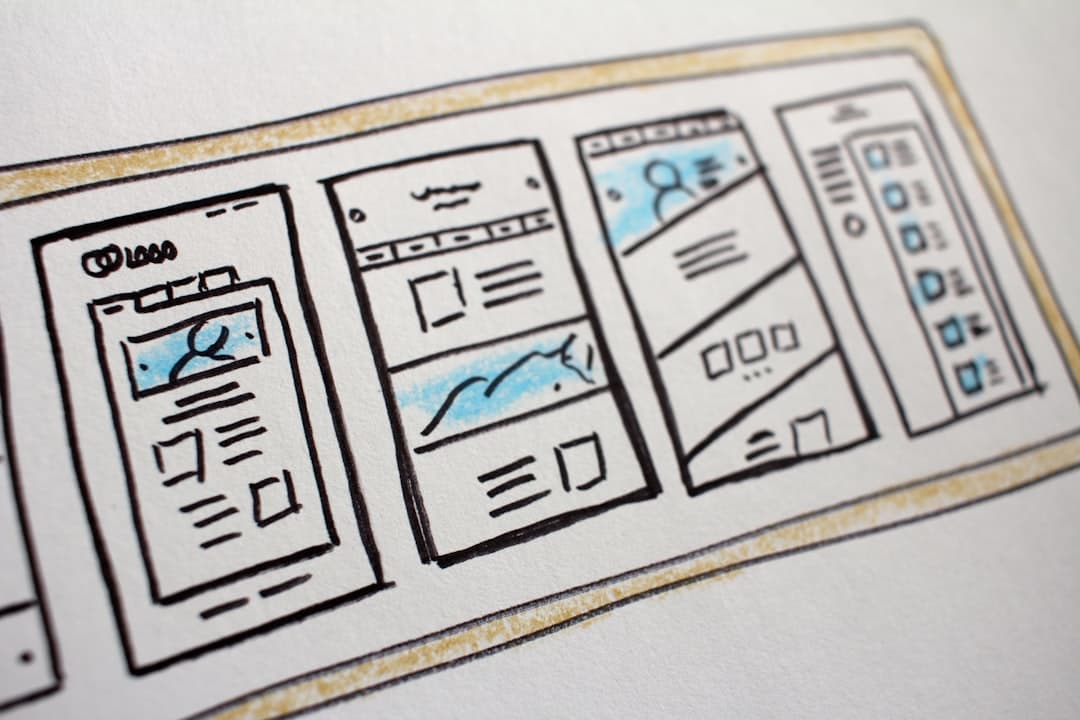
Breadcrumb & Navigation Strategy
Create a search-friendly information architecture with intuitive navigation and structured breadcrumbs. We connect user journeys, crawl paths, internal authority, and structured data into one scalable framework.
Breadcrumb & Navigation Strategy
A website’s navigation is more than a collection of menus. It is a structural system that communicates hierarchy, distributes internal authority, guides users through content, and helps search engines discover and interpret important URLs.
Our Breadcrumb & Navigation Strategy service aligns information architecture, user experience, technical SEO, and structured data. We design navigation systems that remain intuitive for users while supporting scalable crawling, contextual internal linking, and clear entity relationships for traditional search and generative search experiences.
What the strategy covers
- Primary, secondary, utility, footer, contextual, and in-content navigation
- Hierarchical breadcrumb trails for products, services, categories, articles, and resources
- Website taxonomy, URL relationships, and content groupings
- Internal link equity distribution and contextual anchor text
- Crawl paths, crawl depth, orphan-page prevention, and indexation support
- Faceted navigation controls and parameter-handling recommendations
- Mobile navigation, responsive menus, and accessibility requirements
BreadcrumbListstructured data and visible breadcrumb consistency- Navigation labels designed for users, search engines, and answer engines
- Governance rules for future pages, migrations, and content expansion
Why breadcrumb and navigation architecture matters
A clear navigation system reduces the distance between users and valuable content. It also creates predictable relationships that search engines can use to discover URLs, understand topical hierarchy, and interpret a site’s information architecture.
Effective navigation can help organizations:
- Improve wayfinding and reduce unnecessary backtracking
- Strengthen contextual internal linking between related pages
- Make priority content easier to discover and crawl
- Clarify parent-child and sibling relationships within a taxonomy
- Support sitelink eligibility and breadcrumb search enhancements where applicable
- Reduce orphan pages and inconsistent content categorization
- Improve mobile usability without hiding critical destinations
- Give large language models and generative systems clearer page context
Breadcrumbs are not a substitute for primary navigation, a sitemap, or a sound URL structure. They are a complementary interface and semantic signal that reinforces where a page sits within the broader site hierarchy.
Our technical approach
1. Information architecture and taxonomy analysis
We begin by reviewing the current website structure, content inventory, URL patterns, analytics data, search demand, and business priorities. The objective is to distinguish between:
- Global destinations: High-level sections that belong in primary navigation
- Task-oriented destinations: Pages users need to complete an action or find support
- Topical hubs: Authoritative category, service, solution, or resource pages
- Detail pages: Product, location, article, comparison, or documentation pages
- Utility destinations: Account, contact, legal, language, and support pathways
We assess whether the current taxonomy reflects how users search and how the organization defines its products, services, entities, and relationships.
2. Navigation model and hierarchy design
We define a navigation model that balances business priorities with findability. Deliverables may include:
- Global navigation recommendations
- Mega-menu and dropdown architecture
- Secondary and contextual navigation patterns
- Footer navigation and HTML sitemap recommendations
- Mobile menu prioritization
- Related-content and next-step modules
- Parent, child, sibling, and cross-category relationships
- Rules for navigation placement, visibility, and labeling
Navigation labels should be concise, descriptive, and consistent. We avoid vague labels such as “Solutions” or “Learn” when more specific language would improve comprehension and search relevance. Where a broad label is strategically necessary, we define the taxonomy beneath it and establish supporting hub pages.
3. Breadcrumb trail architecture
We create breadcrumb patterns based on page type and user intent. Common models include:
- Hierarchical breadcrumbs: Home > Category > Subcategory > Page
- Attribute-aware breadcrumbs: Home > Product Type > Brand > Product
- Content breadcrumbs: Home > Topic > Subtopic > Article
- Location breadcrumbs: Home > Region > City > Local Service
- Documentation breadcrumbs: Home > Product > Version > Guide
A breadcrumb should represent a meaningful navigational path, not simply reproduce URL segments. The trail should be consistent with the visible page hierarchy and should not introduce irrelevant, duplicate, or inaccessible levels.
Recommended implementation principles include:
- Place breadcrumbs near the top of the main content area
- Use a consistent separator and accessible markup
- Link each valid parent level, except where the current-page label is intentionally non-linked
- Use concise, human-readable labels
- Keep the current page visible as the terminal item
- Avoid keyword stuffing or unnatural repetitions
- Ensure the breadcrumb trail works on narrow mobile viewports
- Maintain consistency between visible breadcrumbs and structured data
4. Internal linking and authority flow
Navigation is a key component of internal linking, but not every link should be given equal prominence. We map links according to business value, topical relevance, user journeys, and search demand.
Our recommendations address:
- Links from high-authority hubs to strategic commercial pages
- Contextual links between related informational and transactional content
- Category-to-detail and detail-to-category relationships
- Descriptive anchor text and semantic variation
- Link prominence, placement, and repetition
- Orphan-page identification and remediation
- Excessive sitewide links that dilute relevance or create noise
- Pagination, related-content, and “next step” pathways
The goal is not to maximize the number of internal links. It is to create a coherent graph in which important pages are discoverable, contextually supported, and connected to relevant entities and topics.
5. Faceted navigation and crawl control
Ecommerce, marketplace, travel, directory, and large publishing websites often generate multiple URL combinations through filters and sorting controls. Without governance, faceted navigation can create crawl inefficiency, duplicate page variants, and indexation ambiguity.
We evaluate:
- Filter combinations with genuine search demand
- Indexable versus non-indexable facet paths
- Canonicalization and URL parameter behavior
- Internal links to valuable filtered landing pages
- Empty, near-duplicate, and thin result sets
- Crawl traps caused by calendar, sort, session, or tracking parameters
- Robots directives, XML sitemaps, and server-side rendering dependencies
- Rules for creating permanent SEO landing pages from high-value facets
Recommendations are based on the site’s platform, rendering model, log data, inventory scale, and search opportunity—not on blanket directives applied to every filter.
6. Structured data and machine-readable hierarchy
Where appropriate, we support breadcrumb implementation using Schema.org BreadcrumbList markup. Structured data should accurately reflect the visible breadcrumb trail and use stable, canonical URLs.
A typical JSON-LD implementation may resemble:
{
  "@context": "https://schema.org",
  "@type": "BreadcrumbList",
  "itemListElement": [
    {
      "@type": "ListItem",
      "position": 1,
      "name": "Home",
      "item": "https://www.example.com/"
    },
    {
      "@type": "ListItem",
      "position": 2,
      "name": "Services",
      "item": "https://www.example.com/services/"
    },
    {
      "@type": "ListItem",
      "position": 3,
      "name": "Breadcrumb Strategy"
    }
  ]
}
Structured data does not guarantee a rich result or improved rankings. Its value is greatest when it accurately describes an already coherent, user-visible hierarchy. We validate syntax, URL canonicalization, consistency, and eligibility using relevant testing and monitoring workflows.
GEO and generative search considerations
Generative search systems need reliable signals about what a page is, how it relates to other pages, and which concepts are central to the website. A well-designed navigation system provides useful supporting context by:
- Grouping pages around explicit topics and entities
- Making authoritative source pages easy to locate
- Using descriptive labels instead of ambiguous menu language
- Reinforcing parent-child relationships across content clusters
- Connecting supporting evidence, definitions, products, and services
- Reducing contradictory categorization across templates
- Providing consistent page context in HTML and structured data
We also recommend aligning navigation with a clear content model. For example, a service hub should link to relevant sub-services, proof points, implementation guides, FAQs, and contact pathways where those relationships are meaningful. This creates a more interpretable content graph for both users and automated systems.
Generative visibility cannot be guaranteed through navigation changes alone. It depends on content quality, authority, technical accessibility, entity clarity, citations, and the evolving behavior of search platforms.
Accessibility and implementation standards
Navigation strategy must work for all users and technologies. Depending on the implementation, our technical requirements may include:
- Semantic HTML navigation landmarks
- Keyboard-accessible menus and focus management
- Correct use of buttons for expandable controls
- Appropriate ARIA states such as
aria-expandedwhere needed - Sufficient color contrast and visible focus indicators
- Touch-friendly mobile targets
- Screen-reader-friendly breadcrumb labeling
- Progressive enhancement for critical links
- Crawlable HTML links rather than interaction-dependent destinations
- Performance-conscious mega menus and client-side components
We collaborate with development teams to translate strategy into component rules, acceptance criteria, templates, and QA checklists.
Deliverables
Depending on site complexity, a project may include:
- Current-state navigation and taxonomy audit
- Page-type and content-hierarchy inventory
- Proposed information architecture
- Navigation tree and menu specifications
- Breadcrumb mapping by template or URL pattern
- Internal linking and authority-flow recommendations
- Faceted navigation and crawl-control framework
- Anchor-text and labeling guidance
- Structured data implementation requirements
- Mobile and accessibility recommendations
- URL, canonical, sitemap, and indexation considerations
- Developer-ready tickets and validation criteria
- Post-launch monitoring and refinement plan
How success is measured
We establish measurement against the site’s objectives and baseline data. Potential indicators include:
- Reduction in orphan or poorly connected URLs
- Improved crawl discovery of priority pages
- Changes in crawl depth and internal link distribution
- Engagement with primary, secondary, and contextual navigation
- Improved pathing to commercial or conversion-focused pages
- Reduction in duplicate faceted URL discovery
- Breadcrumb structured-data validity and consistency
- Organic landing-page performance by content cluster
- Improved indexation quality for strategically important URLs
Rankings, rich results, and generative citations are influenced by many external factors. We therefore evaluate navigation as part of the broader technical SEO and content system rather than as an isolated ranking tactic.
Who benefits from this service?
This service is particularly valuable for:
- Enterprise websites with multiple business units or markets
- Ecommerce catalogs with complex categories and filters
- SaaS websites with products, features, integrations, and documentation
- Publishers with large archives and overlapping topics
- International websites with regional or language taxonomies
- Organizations undergoing redesigns, migrations, or replatforming
- Websites with deep crawl paths, orphan pages, or inconsistent menus
- Teams expanding content without a documented information architecture
Why partner with a specialist agency?
Navigation decisions affect SEO, UX, accessibility, analytics, content governance, development effort, and future scalability. We bring these disciplines together to create recommendations that are technically implementable and commercially relevant.
Our work is grounded in crawlability analysis, information architecture principles, search-intent research, internal linking theory, structured data standards, accessibility considerations, and post-implementation validation. The result is a navigation system designed to support people first while giving search engines and generative systems clearer, more reliable context.